
The Micro-Deposit Architecture Nobody Wants You to See
A low deposit slot casino does not survive on charity — it survives on razor-thin margins, aggressive payment routing, and a psychological hook buried deep in the deposit interface. The moment you drop $1, $3, or $5 into a slot account, you are not just a casual player. You are a data point in a machine that monetizes micro-transactions at industrial scale. 🎰
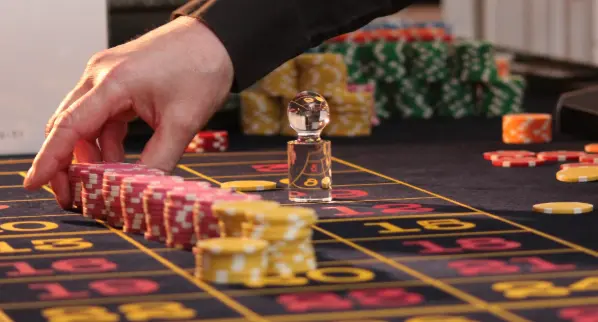
Why Tiny Deposits Are a Technical Trap, Not a Gift
Most players assume low minimum deposits exist to make gambling accessible. Wrong. The $1 entry point is a liquidity extraction mechanism. Payment processors charge fixed fees per transaction — often $0.25 to $0.45 plus a percentage. When you deposit $1, the casino absorbs that overhead and recoups it through slot RTP adjustments on micro-stake spins. The math is brutal: a 94% RTP slot on a $1 deposit with 100 spins at $0.01 per spin generates roughly $0.06 in theoretical casino profit. That is not a business model. That is a funnel. 💸
The real revenue comes from the second and third deposits. Behavioral data from multiple low deposit slot casino platforms shows that players who start with $1 to $5 deposits convert to $20+ depositors within 72 hours at rates exceeding 34% when the welcome bonus is structured with low wagering requirements. The tiny deposit is bait. The reload is the kill zone.

Payment Rail Vulnerabilities and Bonus Abuse Patterns
Here is where it gets ugly. Low deposit thresholds open the door to bonus abuse farmers who exploit sign-up offers with $1 deposits, grind low-variance slots, and cash out before wagering requirements bite. Smart operators counter this with geo-fencing, device fingerprinting, and minimum withdrawal thresholds that exceed the deposit by 10x or more. If you see a $1 minimum deposit paired with a $30 minimum withdrawal, you are looking at a retention trap, not a player-friendly policy.
The payment rails matter more than the slots themselves. Crypto deposits on low deposit platforms settle in minutes with near-zero fees, which is why Bitcoin and USDT rails now dominate micro-deposit traffic on offshore sites. Fiat rails — Visa, Mastercard, Skrill — carry chargeback risk and processing delays that kill the micro-deposit experience. 🚀
Slot Selection at Micro Stakes: Variance Is Your Enemy
Not all slots behave the same when your bankroll is $5. High-volatility titles with 10,000x max wins will eat your balance in under 40 spins at minimum bet. You need low-volatility, high hit-frequency slots with RTP above 96% and minimum bets of $0.01 or lower. Pragmatic Play's 5 Lions Gold, NetEnt's Starburst, and Play'n GO's Reactoonz are the only realistic options for micro-stake survival. Everything else is a donation.
The low deposit slot casino model works because players misunderstand variance. They see a $1 deposit as low risk. In reality, a $1 deposit on a 96% RTP slot with $0.01 spins gives you roughly 70 minutes of play at 3 spins per minute before expected value grinds you to zero. That is not entertainment. That is a countdown timer with flashing lights.
The Withdrawal Ceiling Scam Hiding in Plain Sight
Read the terms. Every low deposit platform caps maximum cashout from no-deposit or micro-deposit bonuses. Common ceilings: $50, $75, $100. You hit a 500x win on a $0.10 spin and suddenly your $50 payout gets clipped to $25 after "processing fees" and "bonus deduction clauses." This is not fraud in the legal sense — it is contractual fine print designed to neutralize upside while keeping you depositing. The house always wins because the house writes the rules.
If the withdrawal cap is below 20x your deposit, walk away. If the wagering requirement exceeds 40x, walk away faster. If the platform does not disclose RTP per slot in the game info panel, do not deposit a single cent.